




Controlling Logistics Costs in 2025: 15 Proven Methods for the Benelux
Controlling logistics costs — what Dutch practitioners call controlling logistics costs — is the systematic process of identifying, measuring, and reducing all expenditures across transport, warehousing, inventory, and last-mile delivery without degrading service levels. Dutch transport sector turnover grew 4.4% in 2025, yet wage costs per hour rose 6.0% across the broader economy. The margin squeeze is structural. This article gives you 15 concrete methods, organized into a decision framework, so you know which lever to pull first — and why.
This is a deep-dive supporting article within our logistics and transportation industry hub. If you are new to the topic, start with the pillar overview before returning here for operational detail.
Table of Contents
- Why Logistics Costs Are Under Pressure Right Now
- The Cost-to-Serve Compass: Your Decision Framework
- Methods 1–5: Controlling Logistics Costs Through Transport Optimization
- Methods 6–10: Warehouse and Inventory Efficiency
- Methods 11–15: Data, AI, and Structural Redesign
- When to Use Which Method: Decision Matrix
Why Logistics Costs Are Under Pressure Right Now
Dutch transport sector turnover grew 4.4% in 2025 — but labor costs per hour rose 6.0% across the economy in 2024, with transport and storage adding 4.1%. Revenue is growing; margins are not keeping pace. For mid-market logistics operators in the Netherlands and Belgium, this gap is the defining challenge of 2026 and the core reason controlling logistics costs has moved from a finance priority to a board priority.
The arithmetic is unforgiving. The transport and storage sector recorded the smallest collective wage increase among all Dutch industries — 4.1% in 2025 versus the national average of 5.0% — yet this still outpaces the 2.4% price increase in transport and storage services recorded the same year. Costs rise faster than the prices companies can charge.
Belgium presents a related pressure. Value added per worked hour in Belgian transport reached €74 in 2024, versus €66 in the Netherlands — making Belgium the most productive transport economy in the EU by this measure. Yet that productivity advantage has not translated into cost immunity. Both markets face identical structural forces: aging driver populations, fuel volatility, and e-commerce demand for smaller, more frequent deliveries.
Here is the honest part: most mid-market companies respond by renegotiating carrier contracts. That addresses perhaps 8–12% of total logistics cost. The remaining 88% sits in order profiles, inventory positioning, warehouse labor productivity, and network design — areas that require data before they yield to intervention.
Source: Veralytiq synthesis, CBS 2025
Left-border callout (Info — blue): The EU AI Act’s risk classification for logistics AI tools — route optimization, demand forecasting — currently falls under “limited risk,” meaning transparency obligations apply but no pre-market approval is required. This matters for procurement decisions in 2026.
The Cost-to-Serve Compass: Your Decision Framework
The Cost-to-Serve (CTS) Compass calculates the true cost of fulfilling each customer, product family, and channel — then maps those costs against seven structural drivers to prioritize the 15 methods below. Companies applying CTS analysis consistently identify 15–25% of revenue tied to unprofitable service configurations they did not know existed.
Most logistics cost programs fail because they optimize visible line items — fuel, carrier rates, headcount — while ignoring the order-profile complexity that drives those costs. A Rotterdam-based industrial distributor with 180 employees recently discovered that 23% of its SKUs generated negative margin after logistics, despite healthy gross margins on paper. CTS analysis made that visible in six weeks.
The four steps of the Compass:
- Measure CTS per segment — Calculate cost per customer, product family, channel, and region. Include order lines, pick/pack, storage days, returns, last-mile, and expediting. Output: a “profit after logistics” heatmap.
- Decompose the 7 cost drivers — Order profile complexity, SKU variety, inventory buffers, network geography, load factor, labor productivity, and returns/damage quality.
- Score each of the 15 methods — Rate each method against your top three cost drivers. High-impact methods score 3; low-impact score 1.
- Sequence by investment and risk — Prioritize high-impact, low-capital, reversible methods first. Quick wins fund structural changes.

One finding repeats across every implementation: companies that skip Step 1 and go straight to technology procurement spend 40–60% more to achieve the same cost reduction as those who measure first. The Compass is not a consulting deliverable — it is a sequencing discipline.
Methods 1–5: Controlling Logistics Costs Through Transport Optimization
Transport typically represents 25–35% of total logistics costs for Benelux mid-market companies. Five methods address this category: AI-driven route optimization, load consolidation, carrier mix rebalancing, dynamic freight procurement, and last-mile redesign. Applied together, these methods can reduce transport spend by 12–22% without service degradation.
Method 1: AI Route Optimization. Static route planning leaves 15–20% of vehicle capacity unused on average. AI routing tools recalculate daily based on actual order volumes, traffic, and time-window constraints. A 2025 case at Antwerp port showed AI rerouting to Zeebrugge saved four days of delay and avoided €13,500 in demurrage charges on a single shipment, with reported savings of 28% on that lane. McKinsey’s 2025 technology outlook identifies autonomous logistics coordination as moving from pilot to practical application this year.
Method 2: Load Consolidation. Partial loads are the single most correctable transport inefficiency. Consolidating orders by delivery zone — even with a 24-hour delay — typically improves load factors by 8–14 percentage points. For a Ghent-based FMCG distributor making 60 daily drops, moving from 68% to 81% average load factor translates to roughly four fewer vehicle movements per day.
Method 3: Carrier Mix Rebalancing. Over-reliance on one carrier creates both cost and resilience risk. A structured carrier mix — primary carrier for 60–70% of volume, secondary for 20–25%, spot market for peaks — reduces average cost per shipment by 6–9% while maintaining service level agreements.
Method 4: Dynamic Freight Procurement. Annual rate negotiations lock in prices that may be above or below spot market by 15–20% depending on the quarter. Quarterly mini-tenders on 20–30% of volume keep carriers competitive without destabilizing relationships.
Method 5: Last-Mile Redesign. Last-mile accounts for 41–53% of total delivery cost in B2C logistics (Gartner, 2024). Consolidation points, parcel lockers, and time-window optimization reduce this disproportionate cost. By 2027, over 75% of last-mile deliveries in Europe could offer near-real-time ETAs via generative AI — yet fewer than 1% of logistics companies currently use GenAI operationally.
Source: Veralytiq client synthesis, 2025
Methods 1 and 2 together deliver the fastest payback — typically under six months — because they require data and scheduling discipline rather than capital investment.
Methods 6–10: Warehouse and Inventory Efficiency
Warehouse and inventory costs represent 25–30% of total logistics spend for most mid-market companies. Five methods target this category: slotting optimization, ABC-XYZ inventory segmentation, safety stock recalibration, returns processing redesign, and warehouse labor routing. Together they typically yield 10–18% cost reduction in this category.
67% of supply chain leaders believe AI and automation will be the primary driver of cost reduction — yet only 12% have successfully scaled these technologies across their entire logistics network, per Gartner (2023). The gap is not technology. It is data readiness and process discipline.
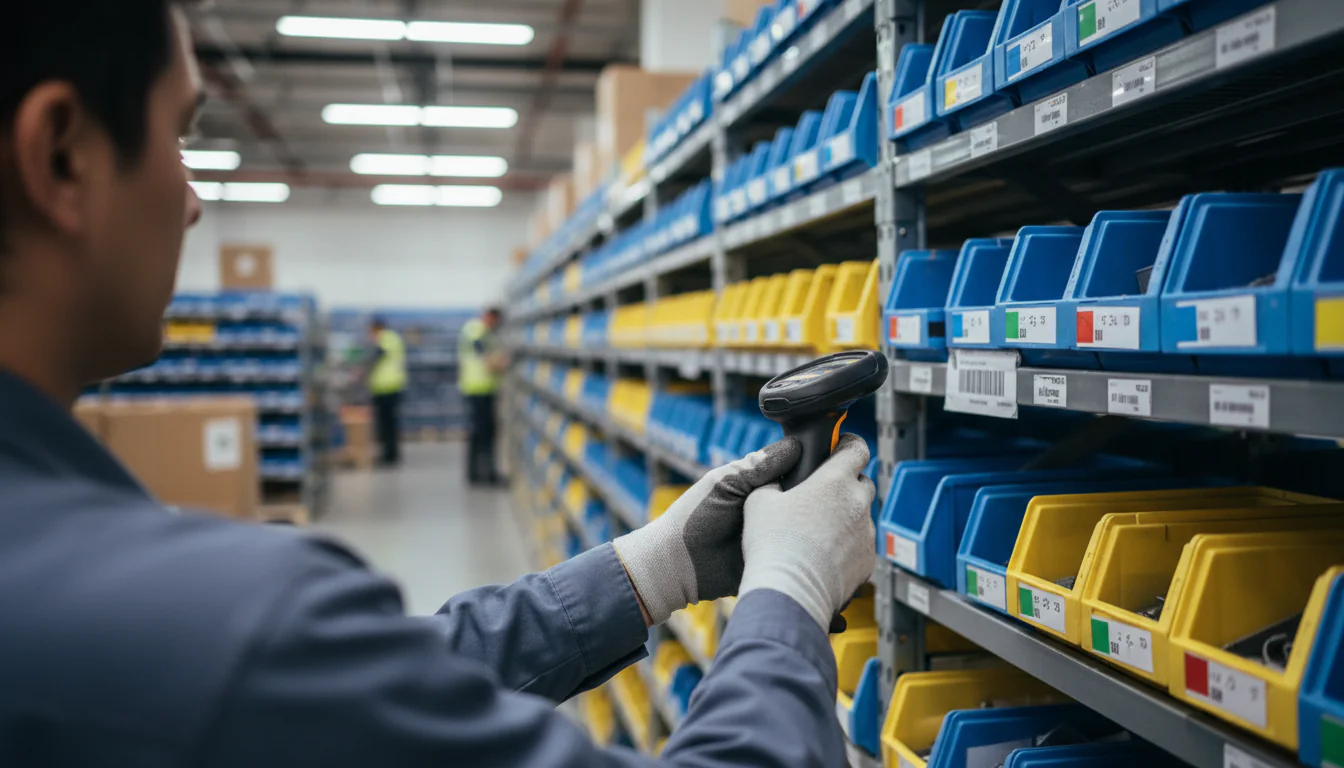
Method 6: Slotting Optimization. Product placement in the warehouse directly determines pick labor cost. Placing the top 20% of SKUs by pick frequency within 15 meters of packing stations reduces travel time by 20–30%. This requires no technology — just data on pick frequency and a one-time reorganization.
Method 7: ABC-XYZ Inventory Segmentation. ABC classifies by value; XYZ by demand variability. The combination reveals which SKUs deserve tight replenishment cycles (A-X: high value, predictable) versus which carry excess safety stock (C-Z: low value, erratic). Eliminating over-stocking on C-Z items alone typically reduces inventory carrying costs by 8–12%.
Method 8: Safety Stock Recalibration. Most mid-market companies set safety stock using rules of thumb — “two weeks of demand.” Statistical safety stock calculation using actual lead time variability and service level targets reduces average inventory by 15–25% without increasing stockouts. The tools to do this calculation are widely available and inexpensive; the barrier is discipline, not budget.
Method 9: Returns Processing Redesign. Returns cost 2–4x the original fulfillment cost when processed ad hoc. Dedicated returns lanes, grading at receipt, and automated disposition rules — restock, refurbish, liquidate, destroy — cut returns processing cost by 30–40%. For e-commerce-heavy operations, this single method can recover 2–3 margin points.
Method 10: Warehouse Labor Routing. Pick-by-voice, pick-by-light, and batch picking are not new — but adoption among Benelux mid-market warehouses remains below 40%. Batch picking alone increases pick productivity by 20–35% with minimal capital investment. Digital twin adoption in warehousing currently sits at 1–5% per Gartner, suggesting significant upside for early movers.
| Method | Primary Saving | Typical Reduction |
|---|---|---|
| 6. Slotting Optimization | Pick labor | 20–30% travel time |
| 7. ABC-XYZ Segmentation | Inventory carrying | 8–12% |
| 8. Safety Stock Recalibration | Inventory carrying | 15–25% |
| 9. Returns Processing | Returns cost | 30–40% |
| 10. Warehouse Labor Routing | Pick productivity | 20–35% |
Methods 11–15: Data, AI, and Structural Redesign
The final five methods address structural cost — the kind that requires data infrastructure before it responds to intervention. Payback periods run 12–24 months, but these methods deliver the largest absolute reduction: 15–25% of total logistics spend when implemented with proper data foundations.
88% of organizations now report regular AI use in at least one business function, up from 78% the prior year, per McKinsey’s 2025 State of AI survey. For logistics specifically, the highest-value AI applications are demand forecasting, dynamic pricing, and network design — not chatbots.
Method 11: Demand Forecasting with Machine Learning. Statistical forecasting produces 20–35% forecast error on average for mid-market SKU portfolios. ML-based forecasting reduces this to 10–18%, directly cutting both stockouts and overstock. McKinsey estimates AI-driven supply chain management can reduce logistics costs by 15% while improving service levels by 65% compared to slower-moving competitors — in best-practice implementations.
Method 12: Network Design Optimization. Where you place stock determines 60–70% of transport cost before a single order is placed. Network design reviews using actual order data typically reveal 8–15% transport savings. A mid-market manufacturer in Eindhoven serving the Benelux and western Germany moved from two to three strategically placed distribution points and reduced average delivery distance by 31%.
Method 13: Automated Procurement and Spot Buying. Manual freight procurement leaves money on the table during rate troughs. Automated procurement tools connected to carrier APIs reduce procurement labor cost by 40–60% and improve rate quality by 5–8% through systematic comparison.
Method 14: Cost-to-Serve Pricing Alignment. Once CTS is calculated per customer and channel, the data often reveals structurally unprofitable accounts. The response is not to fire those customers — it is to adjust minimum order quantities, add small-order surcharges, or shift them to lower-cost channels. This method consistently delivers the highest ROI of all 15, but requires commercial courage. Companies that avoid it leave 3–5 margin points on the table indefinitely.
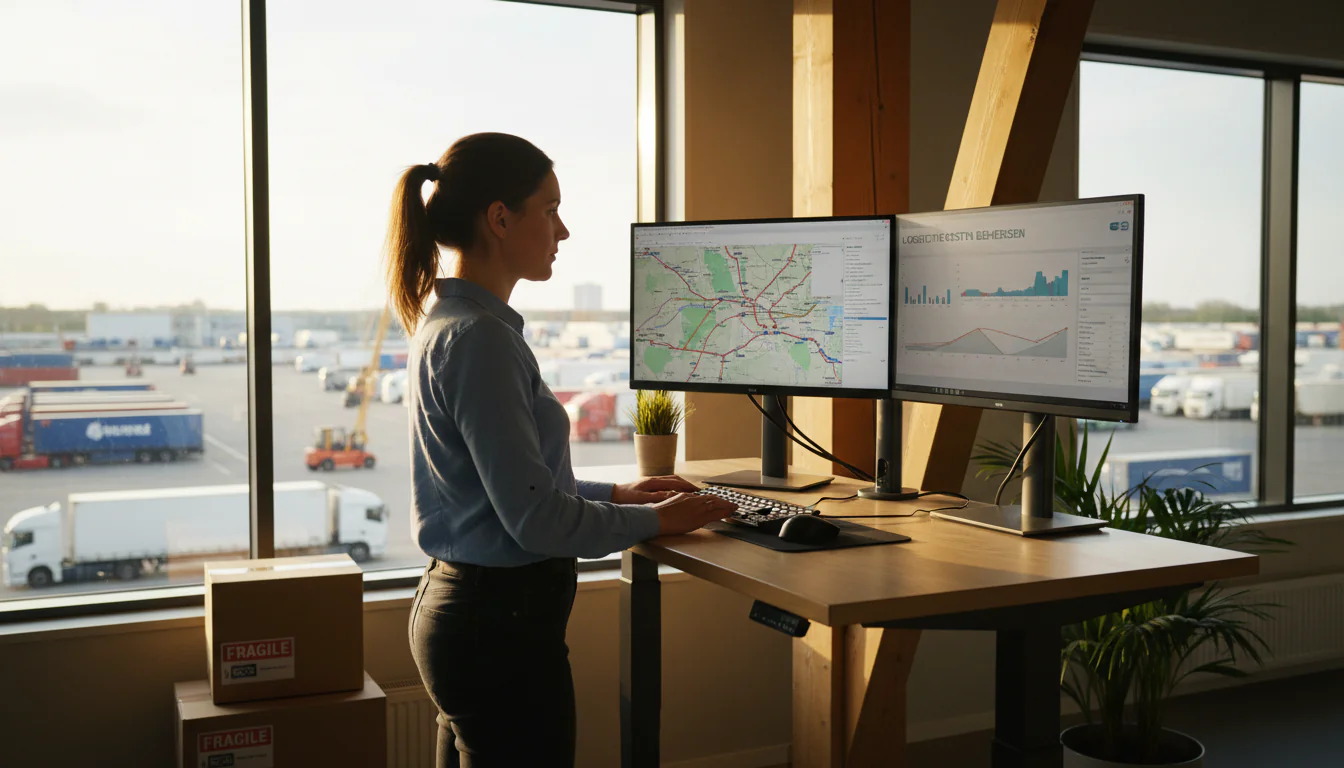
Method 15: Operational Intelligence Dashboards. You cannot manage what you cannot see. Real-time dashboards connecting transport management systems, WMS, and ERP give logistics managers the visibility to act on exceptions within hours rather than days. 89% of Dutch companies with 10–250 employees have reached basic digital intensity per CBS (2026) — the infrastructure exists; the integration layer is the gap.
For companies ready to build this data layer, our operational intelligence solution and industry applications overview show how these methods apply in practice.
When to Use Which Method: Decision Matrix
Read this matrix as a sequencing guide, not a ranking. Start with low-investment, low-risk methods to generate quick wins and build organizational confidence. Use that momentum — and the data generated — to fund medium-investment methods. Reserve structural redesign for when you have 12 months of clean operational data.
| Method | Primary Cost Driver | Investment Level | Payback Period | Risk Level |
|---|---|---|---|---|
| 1. AI Route Optimization | Transport (fuel/time) | Medium | 3–6 months | Low |
| 2. Load Consolidation | Transport (capacity) | Low | 1–3 months | Low |
| 3. Carrier Mix Rebalancing | Transport (rates) | Low | 2–4 months | Medium |
| 4. Dynamic Freight Procurement | Transport (rates) | Low-Medium | 3–6 months | Low |
| 5. Last-Mile Redesign | Last-mile cost | Medium-High | 6–12 months | Medium |
| 6. Slotting Optimization | Warehouse labor | Low | 1–2 months | Low |
| 7. ABC-XYZ Segmentation | Inventory carrying | Low | 2–4 months | Low |
| 8. Safety Stock Recalibration | Inventory carrying | Low | 3–6 months | Low |
| 9. Returns Processing | Returns cost | Medium | 4–8 months | Low |
| 10. Warehouse Labor Routing | Warehouse labor | Medium | 4–8 months | Low |
| 11. ML Demand Forecasting | Inventory + transport | Medium-High | 9–18 months | Medium |
| 12. Network Design | Transport (structural) | High | 12–24 months | Medium |
| 13. Automated Procurement | Procurement labor | Medium | 6–12 months | Low |
| 14. CTS Pricing Alignment | Revenue quality | Low | 3–6 months | High |
| 15. Operational Intelligence | All categories | Medium-High | 9–18 months | Low |
Start with Methods 2 and 6 — load consolidation and slotting optimization. Together they deliver 10–18% cost reduction with minimal capital, within 90 days. That cash funds demand forecasting and network design. Controlling logistics costs (controlling logistics costs) is a sequencing problem as much as a technology problem.
Key Takeaways
Five findings that should change how you prioritize your logistics cost program in 2026.
- Labor costs outpace transport price increases. Dutch transport sector turnover grew 4.4% in 2025, but economy-wide labor costs per hour rose 6.0% in 2024. The margin gap is structural, not cyclical. CBS, 2025
- Cost-to-Serve analysis is the prerequisite, not the outcome. Without CTS measurement, logistics cost programs address 8–12% of the problem. With it, companies routinely find 15–25% of revenue tied to unprofitable service configurations.
- Quick wins fund structural change. Load consolidation (Method 2) and slotting optimization (Method 6) together deliver 10–18% cost reduction with minimal capital — within 90 days.
- AI adoption in logistics is broad but shallow. 88% of organizations use AI in some function, but fewer than 1% use generative AI operationally in logistics. McKinsey, 2025
- Network design delivers the largest structural savings — 8–15% of transport cost — but requires 12 months of clean data and 12–24 months to payback. Sequence it last, not first.
Frequently Asked Questions
Five questions logistics managers ask most often about reducing costs in Benelux mid-market operations.
What is the fastest way to reduce logistics costs without capital investment?
Load consolidation and slotting optimization are the two highest-impact, zero-capital methods. Load consolidation improves vehicle fill rates by 8–14 percentage points by grouping deliveries by zone. Slotting optimization reduces warehouse pick travel time by 20–30% through data-driven product placement. Both show measurable results within 30–60 days.
How does Cost-to-Serve analysis differ from standard cost accounting?
Cost-to-Serve analysis allocates all logistics activities — pick, pack, transport, returns, storage — to individual customers, products, and channels. Standard cost accounting aggregates these into overhead. CTS makes “profit after logistics” visible per segment, revealing which customers or SKUs are structurally unprofitable despite healthy gross margins.
Which AI tools are most effective for reducing transport costs?
Route optimization AI and ML-based demand forecasting deliver the highest verified ROI. Route optimization reduces fuel and time costs by recalculating daily based on actual orders. Demand forecasting cuts forecast error from 20–35% to 10–18%. Both require clean historical data as a prerequisite. See our custom AI FAQ for implementation detail.
How much can a mid-market logistics company realistically save?
McKinsey estimates AI-driven supply chain management can reduce logistics costs by 15% in best-practice implementations. For mid-market companies applying these 15 methods sequentially, a realistic 18-month target is 12–20% total logistics cost reduction — with the first 5–8% achievable within 90 days through quick-win methods.
Are there Benelux subsidies available for logistics digitalization?
Yes. The WBSO R&D tax credit covers 32% of eligible R&D labor costs up to €350,000. The MIT scheme funds feasibility studies for SMEs. RVO administers both. In Flanders, Vlaio’s COOCK program funds collaborative logistics digitalization projects. Application windows open twice yearly.
End CTA
Veralytiq has guided Benelux mid-market companies through logistics cost programs that combine CTS analysis, data foundation work, and targeted AI implementation — following the same sequencing logic described in this article. Clients applying this approach have achieved 12–20% total logistics cost reduction within 18 months, with the first measurable results in under 90 days.
From Data to Done. If your logistics margins are under pressure and you want to know which of these 15 methods applies to your specific cost structure, book a free introductory meeting. We will map your CTS profile and identify your top three quick wins in the first session. Controlling logistics costs (controlling logistics costs) starts with knowing where your money actually goes.
Related Articles
- Supply Chain Automation and AI: Industry Applications — Sector-specific AI ROI benchmarks including logistics
- The Data-to-Done Framework: 7 Phases of Custom AI Development — The implementation sequence behind logistics AI projects
- The True Cost of Custom AI: What Mid-Market Companies Actually Pay — Investment sizing for logistics AI initiatives
- How to Choose the Right Custom AI Partner — Eight criteria that separate execution from expensive experimentation
- Logistics and Transportation Industry Hub — Full sector overview including automation and network design
- Logistics Optimization: Lean & Six Sigma Methods — Logistics optimisation
- Logistics Audit: How to Diagnose and Improve Your Logistics Processes — The logistics audit
- Logistics Consultant Hiring Guide: A Complete Guide for Mid-sized Companies in the Benelux — Hiring a logistics consultant
Sources
- CBS: Cao-lonen stijgen in 2025 met 5,0 procent — CBS (Centraal Bureau voor de Statistiek), January 2026
- CBS: Loonkosten per gewerkt uur 6 procent hoger in 2024 — CBS, October 2025
- CBS: Ruim 4 procent meer omzet transportbedrijven in 2025 — CBS, 2026
- CBS: Arbeidsproductiviteit transportsector afgelopen tien jaar niet gegroeid — CBS, October 2026
- CBS: Ontwikkeling cao-lonen dashboard — CBS, 2026
- CBS: Bijna 4 procent meer omzet transportbedrijven in tweede kwartaal 2025 — CBS, 2025
- Transport Online: CBS cao-lonen 2025 met 5,0 procent gestegen — Transport Online, 2026
- The State of AI: Global Survey 2025 — McKinsey & Company, 2025
- McKinsey Technology Trends Outlook 2025 — McKinsey & Company, 2025
- Port of Antwerp-Bruges: Annual Report Completed 2025 — Port of Antwerp-Bruges, 2025
- Gartner Hype Cycle for Supply Chain Execution Technologies 2024 — Gartner, 2024
- Gartner Supply Chain Top 25 for 2025 — Gartner, 2025
- CBS: Bedrijven met digitalisering in top 3 EU — CBS, 2026
- CBS: Digitalisering en kenniseconomie 2025 — CBS, 2026
- SOOB: Slimmer werk(en) — Visie sociale partners wegvervoer en logistiek 2025 — SOOB, 2025