




Logistics Consultant Guide: Advice for Dutch Companies (Complete Reference)
This logistics consultant guide is a structured reference that helps Dutch mid-market companies evaluate, select, and work with logistics advisors who deliver measurable operational and financial results. The Dutch transport sector posted 4.4% revenue growth in 2025, according to CBS. Yet 76% of supply chain executives report that digital transformation initiatives fail to meet expected ROI, according to Gartner’s Supply Chain Technology User Wants and Needs Survey.
This guide covers every decision point: what logistics consultants actually do, how to choose between specialist types, what implementation frameworks work, and where AI and data tools are creating genuine competitive separation in the Benelux market. Every section of this logistics consultant guide connects directly to cash outcomes — not activity metrics.
Table of Contents
- Why the Dutch Logistics Sector Needs Better Advisory Now
- What Does a Logistics Consultant Actually Do?
- Types of Logistics Consultants: A Comparison Framework
- The Flow-to-Cash Control Loop: A Decision Framework
- AI and Data Tools in Logistics Consulting
- How This Logistics Consultant Guide Helps You Choose the Right Advisor
- Cost, ROI, and Subsidy Options for Dutch Companies
- Key Takeaways from This Logistics Consultant Guide
- Frequently Asked Questions
- Related Articles
- Sources
Why the Dutch Logistics Sector Needs Better Advisory Now
The Dutch logistics sector is growing in revenue but stagnating in productivity. Transport company turnover rose 4.4% in 2025 (CBS), yet CBS data shows labor productivity growth in logistics has trailed other high-tech sectors by nearly 0.8 percentage points annually. Only 21% of global supply chain leaders can recover from disruptions within one week, according to Gartner’s Supply Chain Technology User Wants and Needs Survey.
The Netherlands processes more than 14% of all European freight by volume, making it uniquely exposed to disruption. The Port of Rotterdam handled 428.4 million tonnes in 2025 — a 1.7% decline — signaling that volume growth alone no longer guarantees margin. Meanwhile, 34% of Dutch transport and storage companies report severe growth constraints from labor shortages, the highest level since 2012, according to DNB.

Digital investment is accelerating. CBS reports total Dutch ICT investment reached €35.5 billion in 2024 — 15.5% of all business investment. AI adoption among Dutch companies reached 23% in 2024 for companies with ten or more employees. Smaller businesses sit at approximately 14%.
That gap between investment and productivity is precisely where a qualified logistics consultant creates value — not by adding technology for its own sake, but by connecting operational change to measurable financial outcomes. The EU AI Act entered phased enforcement in 2025, adding compliance requirements for any AI-assisted logistics decision system. Companies that have not mapped their AI tool exposure face regulatory risk on top of operational pressure. The combination of margin pressure, labor constraints, and compliance complexity is why demand for qualified logistics advisory has grown sharply across the Netherlands and Belgium.
Source: CBS 2026, DNB, Gartner Supply Chain Technology User Wants and Needs Survey
What Does a Logistics Consultant Actually Do?
A logistics consultant diagnoses inefficiencies in supply chain, warehousing, transport, or procurement operations — then designs and implements changes that reduce cost or improve service levels. Engagements typically deliver 8–20% cost reduction in targeted process areas within 90–180 days, based on McKinsey supply chain benchmarks. The work spans strategy, process redesign, technology selection, and change management.
The distinction between a logistics consultant and a software vendor is critical. Vendors sell tools. Consultants are accountable for outcomes. In practice, many engagements blend both — a consultant may recommend a warehouse management system and then manage the implementation. The risk is scope creep: a project that starts as a network design review becomes a multi-year ERP rollout with no clear ROI checkpoint.
What separates effective advisory from expensive overhead is the definition of deliverables before the engagement starts. A credible logistics consultant will specify baseline KPIs, the financial impact formula for each targeted improvement, and a timeline for measurable results. Without these three elements in the proposal, the engagement is likely to be activity-based rather than outcome-based.
Consider a realistic Benelux scenario: a Rotterdam-based distributor with €30M revenue and 180 employees faces 12% OTIF (On Time In Full) penalty charges from its largest retail client. A qualified logistics consultant would quantify the annual cost of those penalties, map the root causes in carrier selection and pick scheduling, and propose a targeted fix — not a platform transformation. The engagement should pay for itself within 90 days.
The single most common reason logistics projects underdeliver is skipping the diagnostic phase. Companies jump to solutions before mapping variability in demand, supply, and operations — and pay for that shortcut in missed targets and rework costs. The Operational Intelligence service page details how Veralytiq structures the diagnostic and control design phases for mid-market logistics companies.
- Baseline KPIs must be defined before any recommendation is made
- Financial impact formula must link each change to a cash outcome
- Timeline for measurable results must be contractually agreed, not implied
Types of Logistics Consultants: A Comparison Framework
Logistics consultants fall into four distinct categories: generalist management consultancies, specialist supply chain firms, technology-led advisors, and interim or fractional logistics managers. Each serves a different need and risk profile. Choosing the wrong type is the most expensive mistake in logistics advisory — not choosing the wrong vendor.

The table below maps each type against the most common mid-market use cases.
| Consultant Type | Best For | Typical Engagement | Cost Range (€) | Risk |
|---|---|---|---|---|
| Generalist (Big 4, McKinsey) | Strategic network redesign | 6–18 months | €150K–€500K+ | High cost, junior delivery |
| Specialist Supply Chain | Process optimization, WMS selection | 3–6 months | €40K–€150K | Narrow scope |
| Technology-Led Advisor | AI/data integration, digital twin | 2–6 months | €25K–€120K | Tool dependency |
| Interim/Fractional Manager | Execution gaps, interim COO | Ongoing | €800–€1,500/day | Cultural fit |
The generalist consultancies bring credibility and benchmarking databases, but mid-market companies (€5M–€100M revenue) frequently receive teams dominated by analysts rather than experienced operators. Specialist supply chain firms offer deeper process expertise but may lack the data and AI capability now required for competitive differentiation.
Technology-led advisors — the category where Veralytiq operates — combine operational diagnostics with data infrastructure and AI implementation. This matters because CBS data confirms Dutch ICT investment is growing at three times the rate of the broader economy. Companies that treat logistics advisory as separate from data strategy are accumulating integration debt they will pay for later.
The interim manager model is underused in the Netherlands. For companies with a clear execution gap — a warehouse that needs to hit a 99.5% pick accuracy target in six months — a fractional logistics director with a performance mandate often outperforms a consulting team on ROI.
One contrarian observation worth making: Accenture’s analysis of 1,100 companies found that “fast followers” — companies that waited for logistics AI tools to mature before adopting — achieved 15% higher ROI than first movers, by avoiding the high R&D costs of unproven technologies. For Dutch mid-market companies, selecting proven, standardized tools with strong API ecosystems beats building custom solutions from scratch.
When evaluating which type fits your situation, the Logistics & Transportation industry page provides sector-specific context for each advisory model. Any logistics consultant guide worth following will tell you the same thing: type selection precedes vendor selection, always.
The Flow-to-Cash Control Loop: A Decision Framework
The Flow-to-Cash Control Loop is a five-step decision framework that connects logistics process improvements directly to working capital and margin impact. It prevents scope creep by requiring every proposed change to demonstrate a measurable cash effect within 90–180 days. Companies using structured frameworks like this reduce wasted advisory spend by an estimated 30–40%.
Most logistics consulting engagements fail not because the recommendations are wrong, but because the scope is too broad. The Flow-to-Cash approach forces prioritization from the first meeting. Any logistics consultant who cannot articulate this kind of structured outcome logic before the engagement starts is a significant risk.
Step 1 — Cash-First Scope: Restrict the initial engagement to one or two supply chain problems that directly pressure working capital or margin. Examples: excess inventory tying up €2M in a Tilburg distribution center, OTIF penalties from a major retail client, or expediting costs running at 3× normal freight rates. The deliverable is a one-page Value Hypothesis with baseline KPIs and the euro-impact formula for each problem.
Step 2 — Variability Map: Before recommending any solution, map the actual variability in demand, supply, and operations. Lead time spread, forecast bias percentage, pick/pack cycle time variation, and carrier on-time performance are the four most diagnostic metrics. A Ghent-based food distributor reduced its safety stock by 22% simply by discovering that 80% of its demand variability came from two SKU families — not from market unpredictability.
Step 3 — Data-to-Decision Readiness: Check whether the data needed to monitor improvements actually exists, is clean, and is accessible. McKinsey identifies data visibility gaps and organizational silos as the primary barriers to supply chain optimization — not technology limitations. If data readiness is low, fix that before buying any new tool. The Data Foundation page outlines how Veralytiq addresses this prerequisite for logistics clients.
Step 4 — Control Design: Define the monitoring mechanism. Which KPIs will be tracked weekly? Who owns each metric? What triggers an escalation? Without a control layer, improvements erode within six months as operational pressure returns to old habits.
Step 5 — Cash Realization: Measure actual financial impact against the Value Hypothesis from Step 1. This is the checkpoint that separates outcomes from activities. If the cash impact is not materializing by day 90, the scope needs to be adjusted — not expanded.
Source: Veralytiq framework benchmarks
Every section of this logistics consultant guide returns to the same test: does this step produce a measurable cash result within a defined window? The Flow-to-Cash framework makes that test operational rather than aspirational.
Schedule a diagnostic conversation to map your operation against the five Flow-to-Cash steps and identify which stage is generating the most cash leakage.
AI and Data Tools in Logistics Consulting
AI delivers measurable results in logistics when applied to specific, data-rich problems: demand forecasting, route optimization, warehouse slotting, and carrier performance monitoring. McKinsey estimates that AI and automation in supply chain management could generate €380–€550 billion in annual value globally. The payback period for warehouse automation has fallen to 3.1 years as robot prices decline and Dutch labor costs rise.
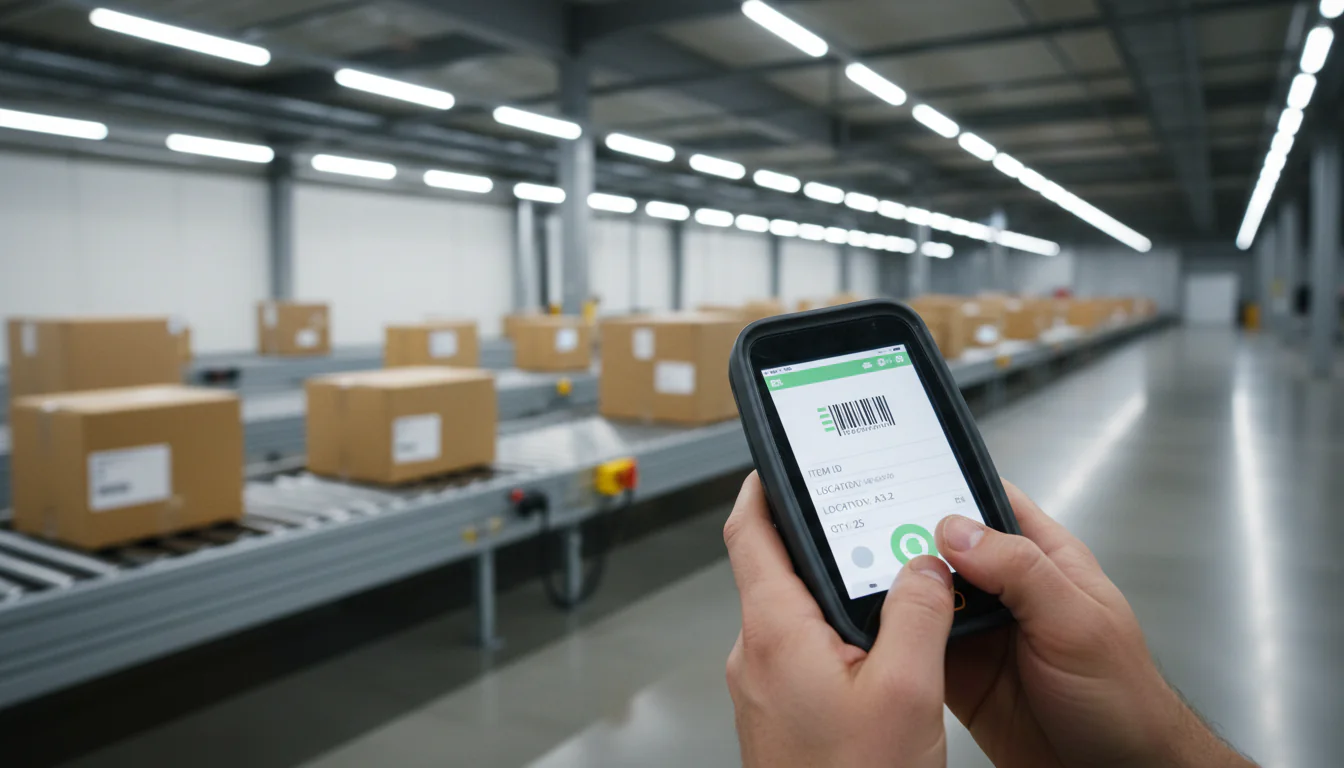
82% of Dutch logistics managers plan further automation investments in the next three years, according to an Evofenedex survey cited by Searchlab. That is a significant commitment — but investment intent and implementation success are different things. Gartner’s Supply Chain Technology User Wants and Needs Survey shows 76% of supply chain digital transformation initiatives fail to meet expected ROI, primarily due to data literacy gaps and cultural resistance rather than technical limitations.
Digital twins represent the most sophisticated current application. McKinsey documents a consumer packaged goods company that reduced distribution center costs by 15% using digital twin modeling of labor and demand variability. A separate OEM case showed 5% reduction in last-mile transportation costs through carrier performance monitoring via digital twin. McKinsey also reports that digital twins increase delivery reliability by up to 20% and reduce transportation and labor costs by up to 10%.
Here is what the headline numbers do not capture: digital twin benefits are almost entirely dependent on data quality in the first six months. Companies that deploy digital twin tools on top of fragmented ERP data see minimal gains. This is not a technology limitation — it is an organizational one. No logistics consultant worth hiring will skip that assessment, and no logistics consultant guide worth reading will gloss over it.
The EU AI Act compliance dimension is not optional. Any AI system used in logistics routing, staffing, or procurement that affects workers or makes consequential decisions requires documentation, explainability, and in some cases human oversight mechanisms. Dutch companies using AI tools from third-party vendors need to verify their vendor’s compliance posture before the next enforcement phase.
Key AI tools by application area:
- Demand forecasting: Reduces safety stock by 15–25% when applied to SKU-level historical data with seasonal adjustment
- Route optimization: Cuts last-mile transport costs by 5–12% in documented deployments
- Warehouse slotting: Improves pick productivity by 8–18% by repositioning high-velocity SKUs
- Carrier performance monitoring: Reduces OTIF penalties by flagging underperforming lanes before contract renewal
The article Supply Chain 4.0 article addresses automation strategies specifically for Benelux SMEs navigating the next wave of logistics technology investments. For companies evaluating whether their current AI tools qualify for WBSO funding, a structured assessment of technical and organizational prerequisites is essential for making informed decisions.
How This Logistics Consultant Guide Helps You Choose the Right Advisor
Selecting a logistics consultant on price alone produces the worst outcomes. The eight criteria that separate effective logistics consulting from expensive activity are: domain depth, data capability, implementation track record, team seniority, methodology transparency, change management approach, subsidy knowledge, and reference quality. Weight implementation track record and team seniority highest for mid-market companies.
The comparison table below gives mid-market companies a structured evaluation matrix.
| Criterion | Red Flag | Green Flag |
|---|---|---|
| Domain depth | “We serve all industries” | Named logistics clients, sector benchmarks |
| Data capability | Relies on client’s existing reports | Builds new data pipelines if needed |
| Implementation track record | Strategy decks only | Documented before/after KPIs |
| Team seniority | Junior analysts on-site | Senior lead on every engagement |
| Methodology transparency | Proprietary black-box process | Shared framework, client owns IP |
| Change management | Technology focus only | Operator training included |
| Subsidy knowledge | Unaware of WBSO/MIT | Can file WBSO applications for R&D components |
| Reference quality | Testimonials only | Reachable client contacts in logistics |
The seniority question deserves emphasis. Large consultancies routinely propose senior partners in pitch meetings and deliver junior teams on-site. For a €40M Dutch distributor, the person doing the work matters more than the firm’s brand. Ask explicitly: who will be present on-site, and what is their logistics operations experience?
Subsidy knowledge is undervalued in vendor selection. WBSO (Wet Bevordering Speur- en Ontwikkelingswerk) covers R&D labor costs for technology development, including AI and automation projects with a logistics application. The MIT (Midden- en Kleinbedrijf Innovatiestimulering Topsectoren) scheme funds innovation projects in designated top sectors — logistics is explicitly included. A logistics consultant who cannot advise on these instruments is leaving client money on the table.
Companies that run a structured eight-criterion evaluation take 30% longer to select an advisor. The tradeoff is straightforward: those same companies report significantly higher satisfaction with outcomes, and they avoid the costly restart that follows a poor initial selection. The selection process is itself a signal of operational discipline — and this logistics consultant guide exists precisely to make that process faster and more reliable.
Three questions to ask every candidate logistics consultant before signing:
- Can you show me a before/after KPI comparison from a logistics client in a similar revenue band?
- Who specifically will be on-site during implementation — and what is their direct operations experience?
- Have you filed WBSO or MIT applications for logistics clients, and can you walk me through the process?
For a broader view of how advisory criteria apply across sectors, the industry applications overview provides useful cross-sector context.
Cost, ROI, and Subsidy Options for Dutch Companies
Logistics consulting engagements for Dutch mid-market companies typically range from €15,000 for a focused diagnostic to €150,000 for a full supply chain redesign with implementation support. ROI of 3–8× the consulting investment is achievable within 12 months when scope is tightly defined. WBSO and MIT subsidies can offset 32–40% of eligible R&D and innovation costs for qualifying projects.

Cost transparency is rare in logistics consulting. Most firms quote day rates (€800–€2,500/day depending on seniority) without connecting those rates to expected outcomes. A more useful frame is cost-per-KPI-point: what does it cost to improve OTIF by one percentage point, or reduce inventory days by one day?
For a Tilburg-based industrial supplier with €45M revenue: reducing inventory days from 38 to 28 frees approximately €1.8M in working capital (assuming 40% of revenue in inventory). A consulting engagement costing €60,000 that achieves that result delivers a 30× cash return — not counting the ongoing margin improvement from lower carrying costs.
Source: McKinsey supply chain benchmarks, Veralytiq framework
WBSO details: The scheme covers 32% of R&D labor costs for the first €350,000 of eligible wages, and 16% above that threshold. Logistics AI projects — demand forecasting models, route optimization algorithms, automated quality inspection — frequently qualify. Applications are submitted to RVO in advance of the project start. Missing the filing deadline means losing the benefit entirely.
MIT Topsectoren: For logistics companies in the Topsector Logistics, MIT haalbaarheidsprojecten (feasibility studies) receive up to 40% subsidy on eligible costs, capped at €20,000 per project. MIT R&D samenwerkingsprojecten (collaborative R&D) receive 35–45% depending on company size. These instruments are genuinely accessible for mid-market companies but require structured project documentation that most operators do not have in place.
Vlaio (Flanders): Belgian companies in the Flemish logistics corridor can access Vlaio’s KMO-portefeuille for advisory subsidies of 30–45% on qualifying consulting engagements, and the Strategic Transformation Support (VLAIO Transformatiesteun) for larger automation investments. This strengthens the Benelux case for cross-border advisory that understands both Dutch and Belgian subsidy frameworks.
The custom AI FAQ provides detailed cost breakdowns for AI projects in the €25,000–€200,000 range, featuring ROI benchmarks directly applicable to logistics use cases. For companies wishing to assess whether their planned project qualifies for the WBSO scheme, it is crucial to identify the relevant technical and organizational prerequisites in good time, ensuring the application submitted to the RVO is well-substantiated and has a strong chance of success.
Key Takeaways from This Logistics Consultant Guide
- Dutch logistics revenue grew 4.4% in 2025 (CBS), but productivity growth lags — creating the conditions where a logistics consultant delivers its highest ROI.
- The type of consultant matters more than the firm’s brand. Technology-led advisors with data capability are increasingly outperforming generalist firms for mid-market logistics companies facing AI and automation decisions.
- The Flow-to-Cash Control Loop prevents scope creep by requiring every recommendation to show a measurable cash impact within 90–180 days — the most reliable protection against expensive, inconclusive engagements.
- Warehouse automation payback has fallen to 3.1 years as robot prices decline and Dutch labor costs rise — making the investment case significantly stronger than five years ago.
- WBSO and MIT subsidies can offset 32–40% of eligible project costs for logistics companies investing in AI, automation, or process innovation — but applications must be filed before project start with RVO.
- This logistics consultant guide returns to one question throughout: does this investment have a clear, measurable cash return within a defined timeframe? If the answer is not immediately available, the scope is not ready.
Frequently Asked Questions
What is a logistics consultant and what do they deliver?
A logistics consultant is a specialist advisor who diagnoses supply chain, warehousing, or transport inefficiencies and implements changes that reduce cost or improve service levels. Engagements typically target 8–20% cost reduction in specific process areas. Deliverables include process redesigns, technology recommendations, KPI frameworks, and implementation support. The best logistics consultant engagements specify cash impact before the first invoice.
How much does logistics consulting cost in the Netherlands?
Logistics consulting in the Netherlands ranges from €15,000 for a focused diagnostic engagement to €150,000 or more for a full supply chain redesign with implementation. Day rates run €800–€2,500 depending on seniority. WBSO and MIT subsidies can offset 32–40% of eligible R&D and innovation costs for qualifying projects.
What is the difference between a supply chain consultant and a logistics consultant?
Supply chain consultants address the full end-to-end value chain including procurement, production planning, and distribution strategy. Logistics consultants focus specifically on transport, warehousing, and fulfillment operations. In practice, many mid-market engagements blend both disciplines, particularly when inventory positioning and carrier management are interconnected.
How long does a logistics consulting engagement take?
A focused diagnostic engagement takes four to eight weeks. A process optimization project with implementation runs three to six months. Full network redesign or WMS implementation projects typically require six to eighteen months. Companies that use the Flow-to-Cash framework to constrain scope consistently complete engagements faster and with better-defined outcomes.
Which Dutch subsidies apply to logistics innovation projects?
WBSO covers 32% of R&D labor costs for AI and automation development in logistics. MIT Topsectoren offers 35–45% subsidy for collaborative innovation projects in the Topsector Logistiek. Both require advance application to RVO before project work begins. Missing the filing window forfeits the subsidy entirely. Belgian companies in Flanders can access Vlaio’s KMO-portefeuille for advisory subsidies of 30–45%.
What AI tools are most effective in logistics consulting today?
Demand forecasting models, route optimization algorithms, and warehouse slotting tools deliver the most consistent ROI in current deployments. Digital twins reduce distribution center costs by up to 15% and improve delivery reliability by up to 20%, according to McKinsey. All tools require clean, accessible data as a prerequisite — technology does not compensate for poor data foundations.
How do I evaluate whether a logistics consultant is qualified?
Evaluate on eight criteria: domain depth, data capability, implementation track record, team seniority, methodology transparency, change management approach, subsidy knowledge, and reference quality. Ask for reachable client contacts in logistics operations, not testimonials. Confirm who will be on-site, not just who presents in the pitch. Any credible logistics consultant will answer all three questions directly.
End CTA
Veralytiq has guided Benelux mid-market companies through logistics diagnostics, AI implementation, and supply chain data projects — always with a defined cash-impact target before the first invoice. Clients using the Flow-to-Cash structure have reduced inventory days by 8–12 days and cut OTIF penalty costs by 40–65% within the first engagement cycle. Our approach is built on the same framework this logistics consultant guide describes: no engagement proceeds without a measurable outcome hypothesis agreed in writing before work begins.
From Data to Done. If your logistics operation is under margin pressure, facing labor constraints, or evaluating automation investment, the right starting point is a structured 60-minute diagnostic conversation — not a software demo.
The core argument of this logistics consultant guide is simple: structured scope, measurable outcomes, and a qualified advisor who will be accountable for both. Every section of this guide has pointed toward that conclusion. The next step is applying it to your specific operation.
Book your free introductory meeting to map your situation against the criteria in this logistics consultant guide and identify where cash leakage is highest.
Related Articles
- Supply Chain 4.0: The Future of Automated Chains — Automation and AI strategies for Benelux SMEs navigating the next wave of supply chain technology.
- Custom AI for Mid-Market Companies: The Complete FAQ — Detailed cost breakdowns for AI projects in the €25,000–€200,000 range, with ROI benchmarks.
- The 7 Most Expensive Mistakes in Custom AI Projects — How to avoid the failures that cost Dutch companies the most in AI and automation investments.
- How to Choose the Right Custom AI Partner — The eight criteria that separate execution-focused partners from expensive experimentation.
- Logistics Consultant Hiring Guide: A Complete Guide for Mid-sized Companies in the Benelux — Hiring a logistics consultant
- Logistics Audit: How to Diagnose and Improve Your Logistics Processes — The logistics audit
- Controlling Logistics Costs: 15 Methods — 15 methods to control logistics costs
Sources
- Ruim 4 procent meer omzet transportbedrijven in 2025 — CBS (Centraal Bureau voor de Statistiek), 2026
- Digitalisering en kenniseconomie 2025 — CBS (Centraal Bureau voor de Statistiek), 2026
- Digitalisering en kenniseconomie 2024 — CBS (Centraal Bureau voor de Statistiek), 2025
- Logistiek & Supply Chain Statistieken Nederland 2026 — Searchlab.nl (citing Evofenedex and McKinsey), 2026
- Digital twins: The key to unlocking end-to-end supply chain growth — McKinsey & Company, 2024
- What is digital-twin technology? — McKinsey & Company, 2024
- Digital twins: Boosting ROI of government infrastructure investments — McKinsey & Company, 2024
- Technology Trends Outlook 2025 — McKinsey & Company, 2025
- Logistieke sector staat op kruispunt — SRA (citing CBS conjunctuurenquête), 2025
- Persberichten 2024 en 2025 — RVO (Netherlands Enterprise Agency), 2025
- Top 100 Logistiek Dienstverleners 2024 — Complete lijst — Logistiek.nl / Buck Consultants International, 2024
- Top 100 LDV — VTS — Online Magazine Logistiek, August 2024
- Top 100 Logistiek Dienstverleners: DHL, CEVA en GXO op podium — BCI Global, June 2024
- Gartner Supply Chain Technology User Wants and Needs Survey — Gartner, 2023. Summary findings available via Gartner Supply Chain Research (cited for 76% digital transformation ROI failure rate and 21% one-week disruption recovery benchmark)