



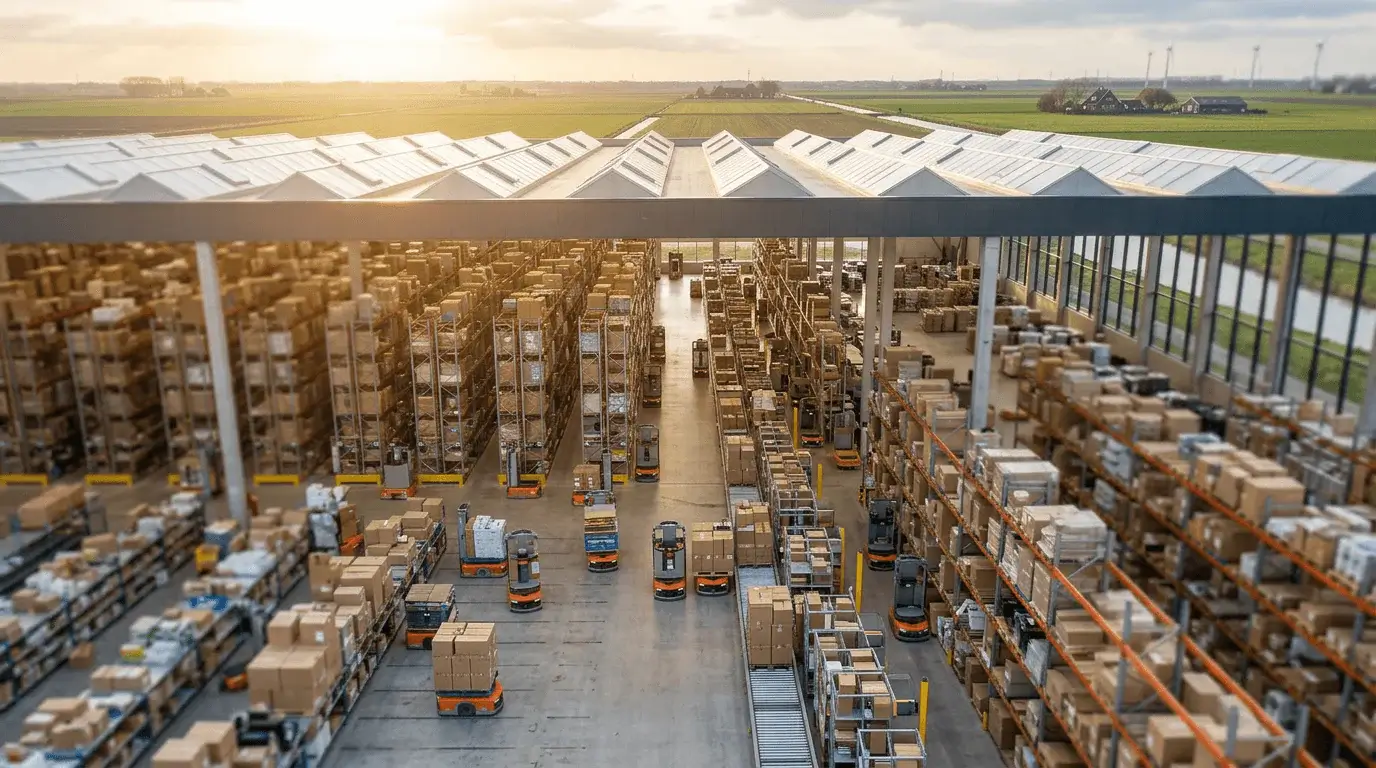

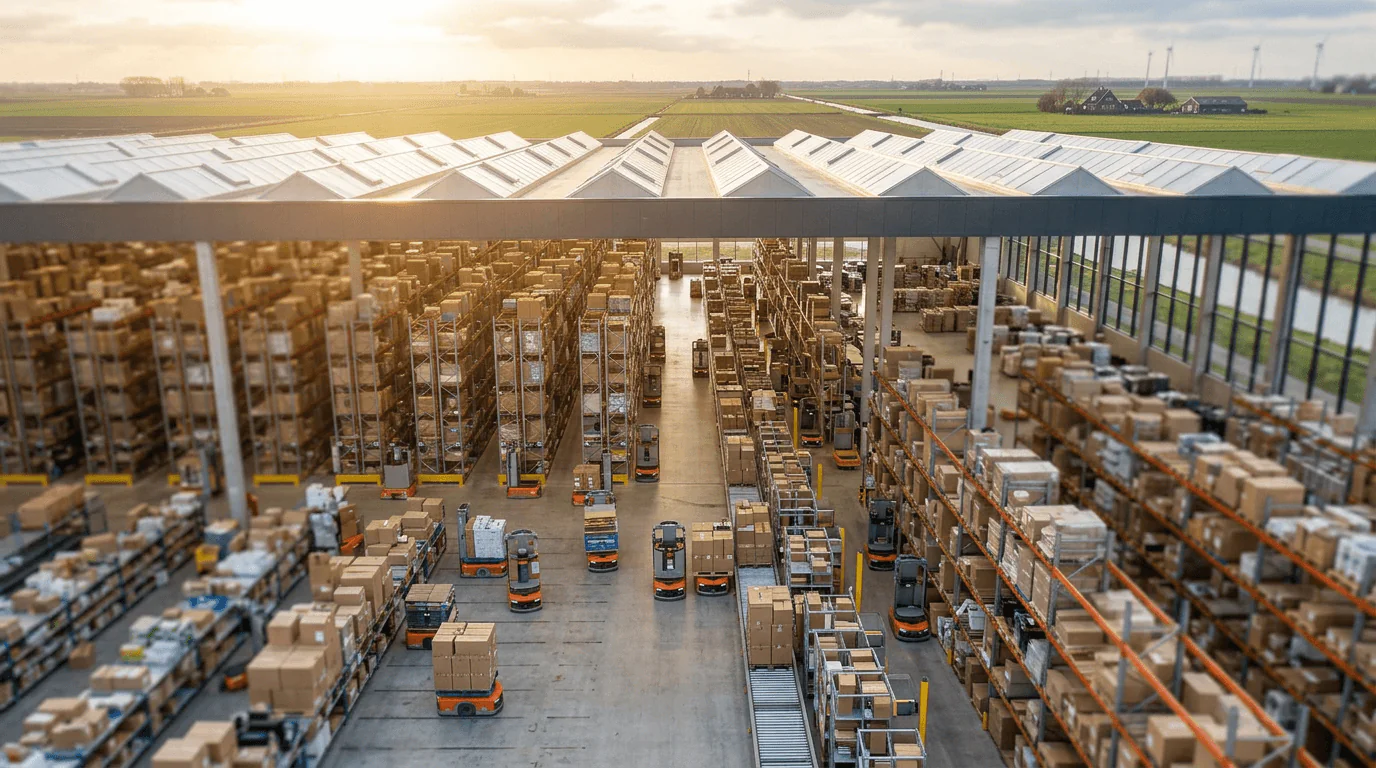
Supply Chain 4.0 is the convergence of AI, IoT, robotics, and advanced analytics to automate decision-making and physical operations across the entire supply chain. Yet here is the number that should keep every Benelux operations leader awake: only 23% of supply chain organizations have a formal AI strategy, according to a Gartner survey of 120 leaders conducted in late 2024. The remaining 77% are investing project by project — chasing short-term ROI while building integration debt that compounds with every new tool.
This article maps what Supply Chain 4.0 actually looks like for mid-market companies in the Netherlands and Belgium, where the gap between ambition and execution is widest. You will find verified data on automation ROI, a practical sequencing framework, the productivity paradox that trips up most adopters, and specific guidance on where to start — and where not to.
Table of Contents
- Why This Matters Now: The Benelux Automation Imperative
- What Supply Chain 4.0 Actually Means (and What It Does Not)
- The GenAI Productivity Paradox: Why 72% Adoption Yields Disappointing Returns
- Automation That Pays: Where AI Delivers Measurable Supply Chain Results
- The Zero-Touch Chain Compass: A Sequencing Framework for Benelux SMEs
- Robotics and Physical Automation in Dutch Warehouses
- Data Governance: The Unsexy Foundation That Determines Everything
- Subsidies, Regulation, and the EU AI Act
Why This Matters Now: The Benelux Automation Imperative
Dutch AI adoption jumped nearly 9 percentage points in a single year — from roughly 14% to 22.7% of companies with 10+ employees by 2024, according to CBS. But the transportation and storage sector lags at 24.2% overall adoption, with logistics functions recording the lowest AI usage across all company sizes.
That gap matters because the Benelux region sits at the crossroads of European trade. The Port of Rotterdam alone monitors 42 million vessel movements and has already demonstrated that AI-driven ETA predictions reduce vessel waiting times by 20% through its Pronto platform. If Europe’s largest port is automating decisions at that scale, the pressure cascades downstream to every mid-market distributor, manufacturer, and 3PL in the region.
Three forces are converging simultaneously.
Labor scarcity is structural, not cyclical. Industry estimates suggest that by 2028, smart robots will outnumber frontline workers in warehouse operations across major logistics markets. In the Netherlands specifically, labor shortages in manufacturing and logistics have reached levels not seen in decades, making automation less a strategic choice and more a survival mechanism.
Automation scope is accelerating. Gartner forecasts that 30% of enterprises will automate more than 50% of their network activities by 2026, up from under 10% in mid-2023. That is a threefold increase in three years. Over 90% of supply chain logistics functions have started or completed some form of digital transformation in the past three years.
The strategy gap is dangerous. With only 23% having formal AI strategies, the vast majority of supply chain organizations are accumulating tools without a coherent integration plan. For a €20M distributor in Breda or a €50M food manufacturer near Antwerp, this means each new automation investment risks becoming an isolated island — generating local efficiency gains that never compound into systemic advantage.
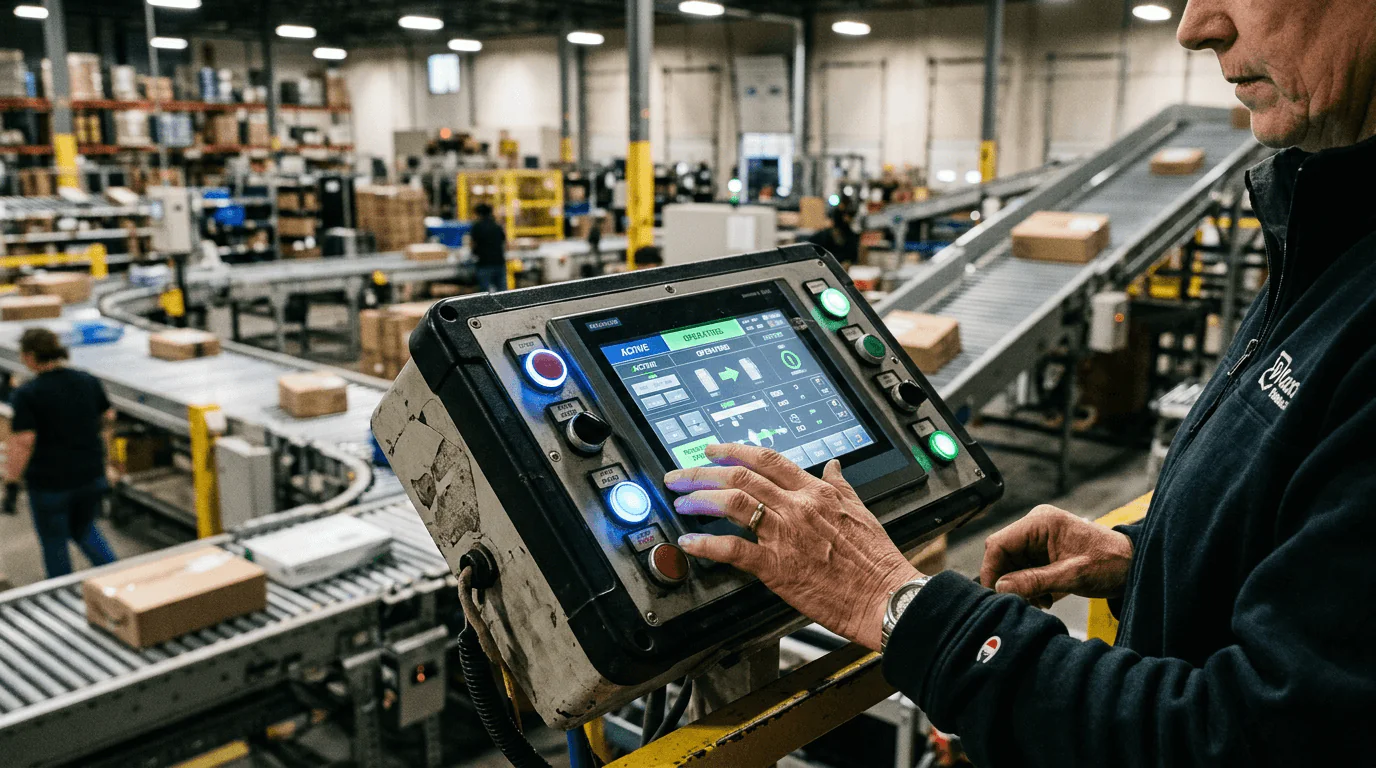
The regulatory environment adds urgency. The EU AI Act, which entered force in stages starting 2024, classifies certain supply chain AI applications — particularly those affecting worker safety or critical infrastructure — under specific risk categories. Companies that build AI capabilities now, with governance baked in, will face far lower compliance costs than those retrofitting governance onto ungoverned systems later.
For Benelux SMEs specifically, the WBSO (Wet Bevordering Speur- en Ontwikkelingswerk) provides R&D tax credits that can reduce the cost of developing AI-driven supply chain solutions by 32% on the first €350,000 of qualifying R&D wage costs (2024 rates), dropping to 16% above that threshold. The MIT (Mkb-innovatiestimulering Regio en Topsectoren) scheme offers SME innovation vouchers up to €3,500 for knowledge transfer and up to €25,000 for R&D collaboration projects. These are not hypothetical — they are active programs with rolling application windows.
The question is not whether Supply Chain 4.0 will reshape Benelux logistics. It already is. The question is whether your organization will be the one shaping it or the one scrambling to catch up.
What Supply Chain 4.0 Actually Means (and What It Does Not)
Supply Chain 4.0 refers to the fourth-generation model where AI, IoT sensors, cloud computing, and robotics integrate to enable autonomous decision-making across procurement, production, warehousing, and distribution — reducing human intervention in routine decisions by 50% or more within targeted processes.
A common misconception: Supply Chain 4.0 equals “put robots in the warehouse.” It does not. The physical automation — AMRs, cobots, automated sortation — is the visible layer. The invisible layer, and the one that determines whether the visible layer generates returns, is the decision automation underneath.
Consider the difference between three maturity levels:
| Maturity Level | Decision Type | Example | Human Role |
|---|---|---|---|
| Supply Chain 2.0 (ERP-era) | Reactive, manual | Planner reviews stock levels weekly, places orders | Decision-maker |
| Supply Chain 3.0 (Analytics-era) | Insight-assisted | Dashboard flags low stock, planner decides action | Informed decision-maker |
| Supply Chain 4.0 (AI-era) | Autonomous within parameters | System detects demand shift, adjusts replenishment order, routes to optimal supplier, confirms within pre-set cost bounds | Exception handler |
The shift from 3.0 to 4.0 is not about better dashboards. It is about moving humans from making routine decisions to setting the parameters within which machines make them.
McKinsey’s 2024 supply chain leader survey found rising interest in AI-based tools specifically for demand planning, supply planning, and early-warning risk systems. The common thread: these are all high-frequency, data-intensive decisions where human judgment adds little value at the individual transaction level but enormous value at the parameter-setting level.
What does this look like in practice? A specialty chemicals distributor with 85 employees outside Utrecht — managing 4,000 SKUs across 12 European markets — does not need a human to decide whether to reorder sodium hydroxide from Supplier A or Supplier B when stock hits the reorder point. That decision involves comparing current price, lead time, quality history, and container availability. An AI agent can make that call in milliseconds with better data coverage than any procurement manager reviewing a spreadsheet.
The procurement manager’s value shifts to negotiating framework agreements, evaluating new suppliers, and setting the decision parameters: acceptable price variance, minimum quality thresholds, maximum lead time by product category.
If you are evaluating where AI-driven supply chain optimization fits your organization, the starting point is identifying which decisions are high-frequency and parameter-bound — not which processes look most “automatable.”

Does this mean full autonomy is the goal? Not necessarily.
Here is the honest part: fully autonomous “lights-out” supply chains — where no human touches any decision — tend to create brittleness rather than resilience. When every decision is automated and a genuinely novel disruption occurs (a canal blockage, a sudden regulatory change, a supplier bankruptcy), the system has no playbook. Research from PwC’s Global Supply Chain Survey suggests that highly automated supply chains can be significantly more susceptible to total system failure during unprecedented events compared to hybrid human-AI systems that maintain manual override capabilities.
The pattern across our client engagements is clear: the most effective Supply Chain 4.0 implementations are not the most automated ones. They are the ones with the clearest boundaries between machine decisions and human decisions.
The GenAI Productivity Paradox: Why 72% Adoption Yields Disappointing Returns
According to Gartner’s August 2024 survey of 265 supply chain professionals, 72% of organizations are already using GenAI — but individual time savings of 4.11 hours per week shrink to just 1.5 hours per team member, and only 54% report improved team-level output. Adoption is high; scaled impact is not.
That 4.11-to-1.5 drop deserves scrutiny. Why would individual productivity gains evaporate at the team level?
Three mechanisms explain the gap. First, coordination overhead: when one team member uses GenAI to produce a demand forecast summary in 20 minutes instead of 2 hours, the time saved gets consumed by colleagues who must verify, interpret, and integrate that output into their own workflows. The AI accelerates production but not consumption.
Second, tool proliferation creates cognitive load. The same Gartner survey found supply chain professionals juggling an average of 3.6 GenAI tools. Each tool has its own interface, its own logic, its own failure modes. The time saved by any single tool is partially offset by the time spent switching between tools and reconciling their outputs.
Third — and this is the one most vendors will not tell you — GenAI in supply chain contexts produces outputs that look authoritative but require domain expertise to validate. A GenAI-generated supplier risk assessment reads fluently. Whether its conclusions are correct requires someone who understands the specific supply market, the supplier’s financial position, and the geopolitical context. The validation step cannot be automated away.
Meanwhile, McKinsey’s 2024 State of AI report shows 65% of organizations regularly using GenAI across all functions. The supply chain sector’s 72% adoption rate actually exceeds the cross-industry average. The problem is not adoption — it is deployment architecture.
What we consistently see in Benelux implementations: companies that deploy GenAI as a standalone tool (a chatbot here, a document summarizer there) get the 4.11-hour individual gain. Companies that integrate GenAI into existing workflow systems — ERP-embedded demand commentary, WMS-integrated exception narratives, TMS-connected carrier communication — get the team-level gains. The difference is not the AI. It is the integration.
A practical example: a €35M building materials wholesaler in Eindhoven deployed a GenAI tool for sales order processing. Individual customer service reps saved 3 hours per week on email parsing and order entry. But the warehouse team saw no improvement because the GenAI outputs still required manual re-entry into the WMS. When the company integrated the GenAI output directly into the WMS via API, warehouse picking accuracy improved by 12% and the team-level time savings materialized.
The lesson: GenAI is not a product you buy. It is a capability you integrate. And integration requires the data foundation and process mapping that most project-by-project approaches skip.
For a deeper look at how demand forecasting with machine learning connects to broader Supply Chain 4.0 architecture, the sequencing matters more than the technology choice.
Automation That Pays: Where AI Delivers Measurable Supply Chain Results
McKinsey’s analysis of AI in distribution operations identifies three proven impact zones: inventory reduction of 20–30%, logistics cost reduction of 5–20%, and procurement spend reduction of 5–15%. These are not theoretical projections — they reflect observed outcomes in organizations that have moved past pilot stage.
Not every supply chain process deserves automation investment at the same time. The returns vary dramatically by use case, and the sequencing determines whether gains compound or collide.
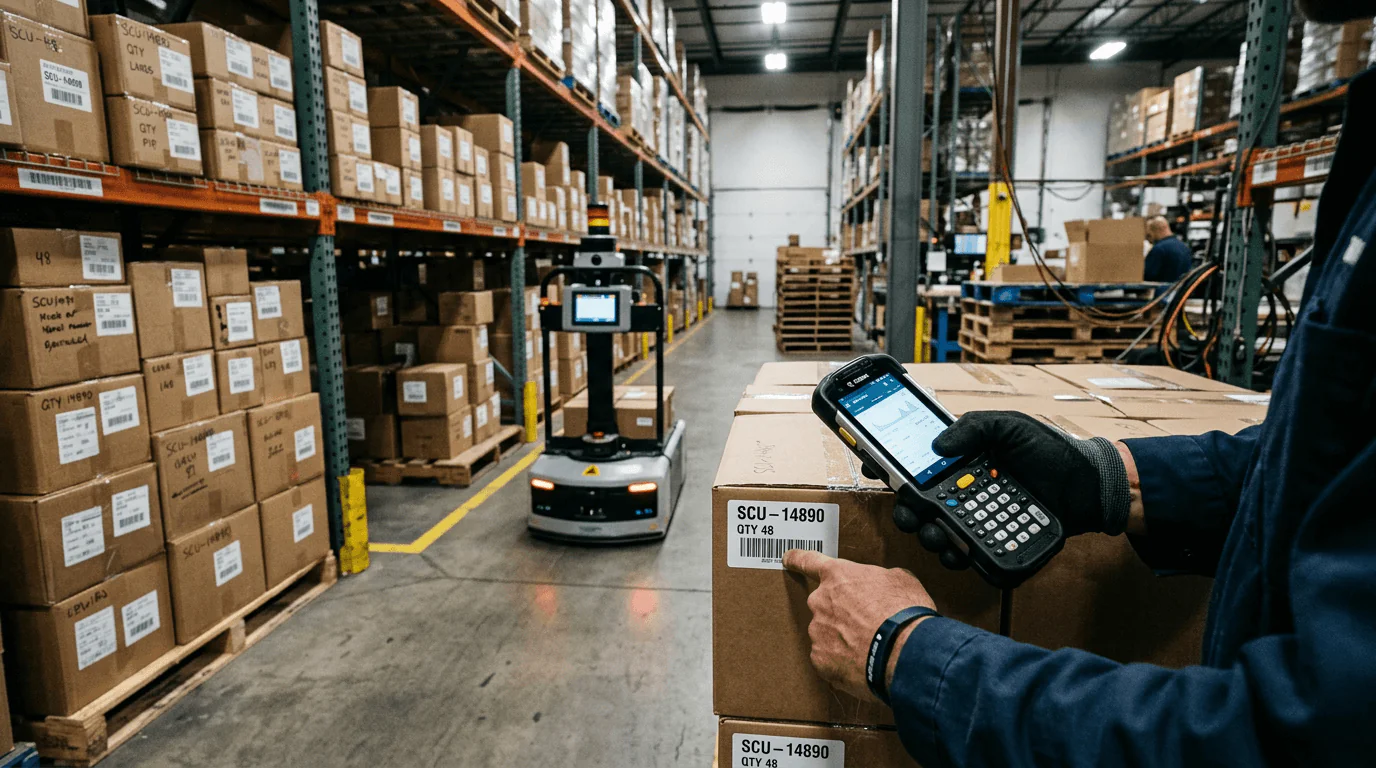
Demand planning consistently produces the highest ROI per euro invested. AI-driven forecasting reduces supply chain errors by 20–50% according to McKinsey’s analysis, and the impact cascades: better forecasts mean lower safety stock, fewer stockouts, less expedited shipping, and reduced waste. For perishable goods distributors — common in the Benelux food sector — the waste reduction alone can justify the investment.
Inventory optimization ranks second. The 20–30% inventory reduction McKinsey identifies translates directly to working capital release. For a €40M industrial parts distributor in Rotterdam carrying €8M in inventory, a 25% reduction frees €2M in cash — enough to fund the entire automation program with change left over. We have written extensively about inventory optimization with AI and the working capital implications for mid-market firms.
Reverse logistics is the overlooked opportunity. McKinsey estimates that AI and automation in reverse logistics can convert $200 billion in annual costs into value through optimized returns routing. For Benelux e-commerce companies processing thousands of returns daily, AI-driven disposition decisions — repair, resell, recycle, or dispose — can shift returns from a pure cost center to a margin contributor.
AI control towers — centralized visibility platforms that aggregate data from ERP, WMS, TMS, and supplier systems — are where the compound effects emerge. McKinsey reports that AI control towers improve fill rates while digital twins increase warehouse capacity by 10%.
Here is a comparison of where to invest first, based on typical Benelux SME profiles:
| Use Case | Typical ROI Timeline | Capital Required (€) | Data Prerequisite | Best Fit |
|---|---|---|---|---|
| Demand forecasting | 3–6 months | €30K–€80K | 2+ years clean sales history | Distributors, FMCG |
| Inventory optimization | 4–8 months | €40K–€120K | Accurate SKU master data | Wholesalers, manufacturers |
| Warehouse automation (AMR/cobot) | 12–24 months | €150K–€500K | Stable WMS, mapped layouts | High-volume DC operators |
| AI control tower | 6–12 months | €80K–€200K | Multi-system integration | Multi-site operations |
| Reverse logistics AI | 6–10 months | €50K–€150K | Returns data with disposition codes | E-commerce, consumer goods |
One number that rarely appears in vendor presentations: the integration cost. For a mid-market company running a legacy ERP (SAP Business One, Exact, Microsoft Dynamics), connecting an AI demand planning tool typically costs 40–60% of the tool’s license fee in integration work during the first year. That cost drops in year two, but ignoring it in the business case is how pilot projects stall.
Considering your first AI supply chain pilot? Our diagnostic assessment maps your data maturity, process readiness, and integration complexity before you commit budget — because the most expensive automation project is the one that never scales.
The Zero-Touch Chain Compass: A Sequencing Framework for Benelux SMEs
Most Supply Chain 4.0 failures are not technology failures — they are sequencing failures. Companies automate the visible (warehouse picking) before stabilizing the invisible (master data). They deploy AI forecasting before ensuring their historical data is clean enough to train on. The Zero-Touch Chain Compass provides a five-stage sequencing model designed for mid-market Benelux companies targeting approximately 30% faster cycle times.
Stage 1: Cycle-Time Value Map
Before any automation investment, map your order-to-cash and procure-to-pay processes end-to-end. But measure only three things per step: queue time (how long work waits), touch time (how long work takes), and exception rate (how often the step fails or requires rework).
The decision rule: automate where queue time is high and exception rate is measurable. Not where the activity is simply visible. A picking operation might look like the obvious automation candidate, but if 60% of your cycle time sits in order validation queues upstream, automating picking delivers marginal gains while the real bottleneck persists.
Deliverable: Top 10 delay nodes ranked by € impact per day of cycle time.
A €25M electrical components distributor in Mechelen, Belgium, ran this exercise and discovered that 44% of their order-to-delivery cycle time was consumed by credit check queues and manual allocation decisions — not by warehouse operations. They automated credit decisioning first, cutting average order processing time from 6.2 hours to 1.4 hours, before touching the warehouse.
Stage 2: Single Source of Operational Truth
Stabilize master data (SKU, bill of materials, supplier lead times, location codes, batch and serial rules) and standardize event timestamps across ERP, WMS, TMS, and MES systems.
This is the stage most companies want to skip. It is also the stage that determines whether everything after it works.
The decision rule: no robotics or AI at scale until you can answer three questions from a single system query: (1) Where is item X right now? (2) When will it arrive at location Y? (3) What is the current cost-to-serve for customer Z? If answering any of these requires opening multiple systems or calling someone, your data foundation is not ready.
The CBS AI Monitor 2024 shows that Dutch companies using AI generated 51% of total revenue despite being a minority of firms. The differentiator is not AI adoption itself — it is the data infrastructure that makes AI outputs trustworthy enough to act on.

Stage 3: Automate Decisions
With clean data flowing, deploy AI for high-frequency, parameter-bound decisions: demand forecasting, replenishment triggers, dynamic pricing rules, carrier selection. These are the decisions where AI reduces errors by 20–50% and the ROI materializes fastest.
The critical distinction: automate decisions, not just recommendations. A system that suggests a reorder quantity but requires a planner to click “approve” on 200 orders per day is a decision-support tool, not decision automation. True Supply Chain 4.0 means the system executes within defined guardrails, and humans intervene only on exceptions.
Stage 4: Automate Motion
Only now — with clean data, integrated systems, and automated decisions — does physical automation make economic sense. AMRs in the warehouse, automated sortation, robotic palletizing, autonomous last-mile delivery vehicles.
Why this sequence? Because a €300,000 AMR fleet navigating a warehouse with inaccurate inventory data will generate more problems than it solves. The robots will route to empty locations, pick wrong items, and create exception volumes that overwhelm the human exception-handling team.
Stage 5: Harden Trust and Governance
The final stage extends automated decision-making across organizational boundaries: to suppliers, logistics partners, and customers. This requires not just technical integration but governance frameworks — who is liable when an AI-generated purchase order is wrong? What audit trail exists? How does this comply with the EU AI Act?
What operational experience shows across our engagements: companies that reach Stage 5 within 18–24 months of starting Stage 1 achieve the ~30% cycle time improvement. Companies that jump to Stage 4 without completing Stages 1–2 typically spend 12–18 months unwinding integration problems before they can move forward again.
Robotics and Physical Automation in Dutch Warehouses
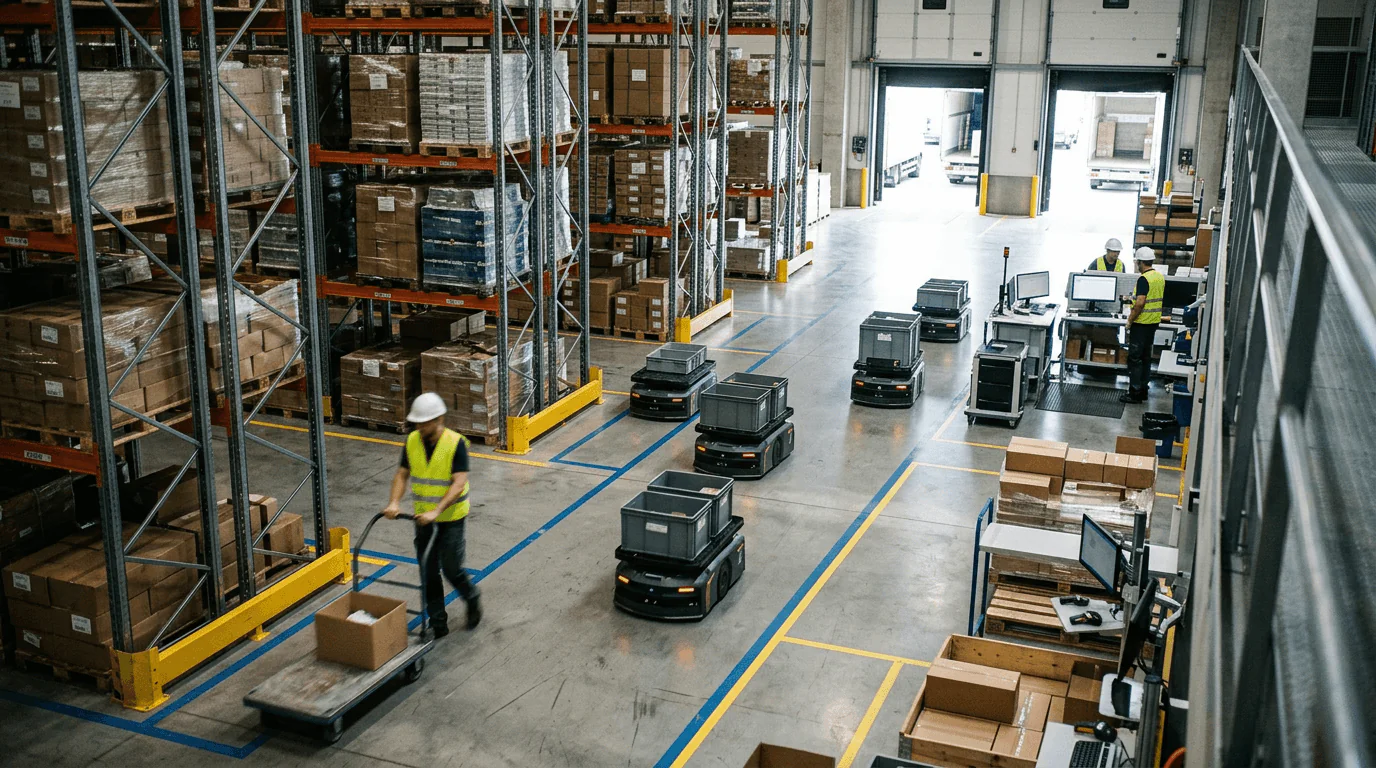
According to industry analysis, the Netherlands warehouse robotics market is growing at a double-digit compound annual rate, driven by e-commerce volume growth, structural labor shortages, and the country’s position as Europe’s logistics gateway. Autonomous mobile robots (AMRs) are estimated to improve picking efficiency by approximately 30%, while collaborative robots (cobots) enhance packaging and palletizing productivity by roughly 15%.
These are directional figures, and the actual returns vary significantly by facility layout, SKU profile, and order characteristics. A high-volume e-commerce fulfillment center processing 10,000 orders per day with standardized packaging will see different AMR returns than a specialty industrial distributor shipping 200 orders per day with highly variable dimensions.
The Port of Rotterdam’s experience offers a useful reference point. Its 2025 pilot with APM Terminals and RWG tested AI-driven container handling optimization, and the port’s broader AI platform monitors vessel movements and predicts maintenance needs. The port’s digital twin pilot reduced wait times by 20% through predictive traffic management. These results at Europe’s largest port demonstrate that physical automation works — but only when layered onto a mature data infrastructure.
For mid-market Benelux companies, the practical entry point is typically cobots rather than full AMR fleets. A cobot deployment in a packaging line requires €40,000–€80,000 in capital, can be operational within 6–8 weeks, and delivers measurable productivity gains without requiring facility redesign. A full AMR deployment requires €150,000–€500,000, 3–6 months of implementation, and often necessitates changes to warehouse layout, floor surfaces, and network infrastructure.
Consider a €30M consumer electronics distributor operating a 12,000 m² warehouse near Tilburg. Their first automation investment was not AMRs — it was automated label printing and apply systems at packing stations, combined with voice-directed picking. Total investment: €65,000. Result: 18% throughput increase and 40% reduction in mislabeling errors. The AMR deployment came 14 months later, once the data from the voice-picking system had generated enough movement pattern data to optimize AMR routing.
The sequencing matters. Physical automation without data-driven routing is just expensive machinery moving inefficiently.
For companies evaluating warehouse-level automation, our analysis of warehouse management with AI covers the technology landscape and integration requirements in detail.
Data Governance: The Unsexy Foundation That Determines Everything
Why do 77% of supply chain organizations lack a formal AI strategy? Because strategy requires a data foundation, and most mid-market companies do not have one.
The CBS AI Monitor 2024 reveals that 23% of Dutch companies with 10+ employees used AI in 2024 — but these AI-using companies generated 51% of total revenue. The revenue concentration suggests that AI’s benefits accrue disproportionately to companies with the data infrastructure to deploy it effectively, not merely to those that purchase AI tools.
Data governance in a Supply Chain 4.0 context means three things:
Completeness. Every SKU has accurate weight, dimensions, cost, lead time, and minimum order quantity. Every supplier has current pricing, payment terms, and quality scores. Every customer has accurate delivery addresses, service level agreements, and credit terms. In practice, most mid-market ERP systems have 15–30% of these fields either empty or outdated.
Consistency. The same product is identified the same way across ERP, WMS, TMS, and e-commerce platforms. A “pallet” means the same dimensions in the warehouse system as it does in the transport management system. Timestamps use the same timezone and format. This sounds trivial. It is not. Inconsistent unit-of-measure definitions alone cause an estimated 5–8% of order errors in multi-system environments.
Currency. Data reflects reality within an acceptable latency window. For demand forecasting, daily updates may suffice. For warehouse robotics routing, data must be near-real-time. For dynamic pricing, sub-second latency may be required. The governance framework must define acceptable latency by use case, not apply a blanket “real-time” standard that is both expensive and unnecessary for most processes.

The CBS data on sector-specific AI adoption shows transportation and storage at 24.2% AI adoption, with machine learning at 22.4% and computer vision at 26.4%. Computer vision’s slightly higher adoption makes sense — it requires less master data governance (the camera sees what it sees) compared to machine learning, which depends entirely on the quality of training data.
The practical implication for Benelux SMEs: if your master data quality score is below 85% (measured as percentage of critical fields that are complete, consistent, and current), invest in data remediation before investing in AI. A €15,000–€30,000 master data cleanup project will generate more AI readiness than a €100,000 AI tool deployed on dirty data.
Subsidies, Regulation, and the EU AI Act
The financial and regulatory landscape for Supply Chain 4.0 investments in the Benelux is more supportive than most operations leaders realize — and more complex than most vendors acknowledge.
WBSO (Wet Bevordering Speur- en Ontwikkelingswerk) is the primary Dutch R&D tax credit. For 2024, the credit rate is 32% on the first €350,000 of qualifying R&D wage and other costs, and 16% above that threshold. Developing a proprietary demand forecasting algorithm, building custom ERP-AI integrations, or creating novel warehouse routing optimization models all qualify. The key requirement: the work must involve technical novelty — implementing an off-the-shelf SaaS tool does not qualify, but configuring and extending it with custom logic often does. Applications are submitted to RVO (Rijksdienst voor Ondernemend Nederland) and can be filed for periods starting up to three months in advance.
MIT (Mkb-innovatiestimulering Regio en Topsectoren) targets SMEs specifically. The knowledge voucher (up to €3,500) funds initial consultations with knowledge institutions — useful for scoping an AI supply chain project. The R&D collaboration voucher (up to €25,000) supports joint development projects with research partners. Both have regional availability windows that vary by province.
In Belgium, Vlaio (Vlaanderen Innovatie & Ondernemen) offers development and research project subsidies covering 25–50% of eligible costs for SMEs, depending on company size and project type. The application process is more involved than WBSO but the absolute subsidy amounts can be higher for larger projects.
The EU AI Act creates a risk-based classification system. Most supply chain AI applications — demand forecasting, inventory optimization, route planning — fall under “limited risk” or “minimal risk” categories, requiring transparency obligations but not the heavy compliance burden of “high-risk” applications. However, AI systems that affect worker safety (e.g., autonomous vehicle routing in shared human-robot warehouse environments) or critical infrastructure (e.g., port logistics optimization) may trigger higher-risk classifications.
The practical guidance: document your AI system’s purpose, data sources, decision logic, and human oversight mechanisms from day one. This documentation costs almost nothing during development but becomes extremely expensive to reconstruct retroactively when compliance deadlines arrive.
For GDPR, supply chain AI systems that process personal data (customer delivery addresses, employee productivity metrics, driver location data) must comply with existing data protection requirements. The intersection of GDPR and the EU AI Act creates a dual compliance obligation that is manageable if addressed during system design but costly if discovered during audit.
If you are mapping supply chain risk management alongside automation strategy, the regulatory dimension is now inseparable from the operational one.
Key Takeaways
-
Supply Chain 4.0 is a sequencing challenge, not a technology challenge. Only 23% of supply chain organizations have formal AI strategies; the rest build integration debt with each project-by-project investment.
-
GenAI adoption is high (72%) but team-level productivity gains are disappointing. Individual time savings of 4.11 hours/week shrink to 1.5 hours per team member because integration, not adoption, drives scaled impact.
-
AI delivers proven ROI in three supply chain zones: 20–30% inventory reduction, 5–20% logistics cost reduction, and 5–15% procurement spend reduction — but only when deployed on clean data foundations.
-
Dutch logistics AI adoption lags at 24.2% despite the Netherlands’ position as Europe’s logistics gateway, according to CBS 2024 data — representing both a risk and an opportunity for early movers.
-
WBSO tax credits (32% on first €350K) and MIT vouchers (up to €25K) can offset 20–40% of Supply Chain 4.0 development costs for qualifying Dutch SMEs.
Frequently Asked Questions
What is Supply Chain 4.0?
Supply Chain 4.0 is the integration of AI, IoT, robotics, and cloud analytics to automate both decision-making and physical operations across the supply chain. It shifts human roles from executing routine decisions to setting parameters and handling exceptions, targeting 20–50% error reduction in demand planning and 20–30% inventory reduction according to McKinsey.
How much does supply chain automation cost for a mid-market company?
For Benelux SMEs (€5M–€100M revenue), initial AI-driven supply chain projects typically range from €30,000–€120,000 for demand forecasting or inventory optimization, and €150,000–€500,000 for physical warehouse automation. Integration costs add 40–60% of tool license fees in year one. Dutch WBSO tax credits can offset 32% of qualifying R&D costs on the first €350,000.
What is the ROI of AI in supply chain operations?
McKinsey reports AI in distribution operations delivers inventory reduction of 20–30%, logistics cost reduction of 5–20%, and procurement spend reduction of 5–15%. ROI timelines range from 3–6 months for demand forecasting to 12–24 months for physical automation, depending on data readiness and integration complexity.
Why do most supply chain AI projects fail to scale?
Only 23% of supply chain firms have formal AI strategies, per Gartner. Most invest project-by-project, creating isolated tools that do not integrate. The GenAI productivity paradox — 72% adoption but only 54% reporting team-level improvement — reflects this integration gap rather than a technology limitation.
How does the EU AI Act affect supply chain automation?
Most supply chain AI applications (demand forecasting, inventory optimization, route planning) fall under “limited risk” or “minimal risk” categories in the EU AI Act, requiring transparency documentation but not heavy compliance. AI systems affecting worker safety in shared human-robot environments may trigger “high-risk” classification with stricter requirements including conformity assessments and human oversight mandates.
What data quality is needed before implementing Supply Chain 4.0?
A minimum 85% master data quality score — measured as the percentage of critical fields (SKU attributes, supplier lead times, customer terms) that are complete, consistent, and current — is the practical threshold. Below this level, AI models produce unreliable outputs. The CBS AI Monitor 2024 shows AI-using Dutch companies generating 51% of total revenue, suggesting data readiness is the primary differentiator.
Is Supply Chain 4.0 relevant for Benelux SMEs or only large enterprises?
Supply Chain 4.0 is increasingly accessible to SMEs. Entry-level AI demand forecasting tools start at €30,000, cobot deployments at €40,000–€80,000. Dutch programs like WBSO and MIT, and Belgian Vlaio subsidies, specifically target SME innovation. With 22.7% of Dutch companies with 10+ employees already using AI, mid-market adoption is accelerating.

Building a Supply Chain 4.0 roadmap requires more than technology selection — it requires honest assessment of data readiness, process maturity, and integration capacity. Our diagnostic framework has been applied across manufacturing, distribution, and logistics operations in the Benelux, mapping the specific gap between current state and automated capability. The methodology covers data quality scoring, process cycle-time mapping, and integration architecture review — the three foundations that determine whether automation investments compound or collide.
Request a Supply Chain 4.0 readiness assessment and get a clear picture of where your organization stands — and what to do next. From Data to Done.
Related Articles
- AI-Driven Supply Chain Optimization: The Complete Guide — Pillar overview of AI applications across the full supply chain
- Inventory Optimization: Reducing Costs with AI — How AI-driven inventory management frees working capital
- Warehouse Management with AI: Efficiency in the Warehouse — Technology landscape for warehouse-level automation
- Supply Chain Risk Management: Predicting Disruptions — AI-powered early warning systems and resilience frameworks
Sources
- Gartner: Just 23% of Supply Chain Firms have AI Strategies — Supply Chain Digital (reporting Gartner survey), 2025
- GenAI adoption surges in supply chains but productivity elusive — TechMonitor (reporting Gartner survey), 2024
- McKinsey Global Supply Chain Leader Survey 2024 — McKinsey & Company, 2024
- Harnessing the power of AI in distribution operations — McKinsey & Company, 2024
- From cost center to competitive advantage: Modernizing reverse logistics with AI — McKinsey & Company, 2024
- The state of AI in early 2024 — McKinsey & Company, 2024
- The top 5 most impactful supply chain trends going into 2024 — 4flow, 2024
- 70 Business Automation Statistics — Vena Solutions (citing Gartner), 2024
- Trends in Logistics Technology, according to Gartner — SCDigest, 2025
- Use of AI technology by Dutch companies — AI Monitor 2024 — CBS (Centraal Bureau voor de Statistiek), 2025
- Dutch AI Monitor 2024 — CBS, 2025
- Increasing use of AI by business — CBS, 2025
- Case study 2 — Digital Report 2025 — Port of Rotterdam, 2025
- AI in Global Logistics — Eglobalis, 2024
- How AI is Changing Logistics & Supply Chain in 2025 — DocShipper, 2025
- The Role of Digital Twins in Enhancing Port Operations — Rcademy, 2024